


The Art of Knots
Inspired by the Roots?
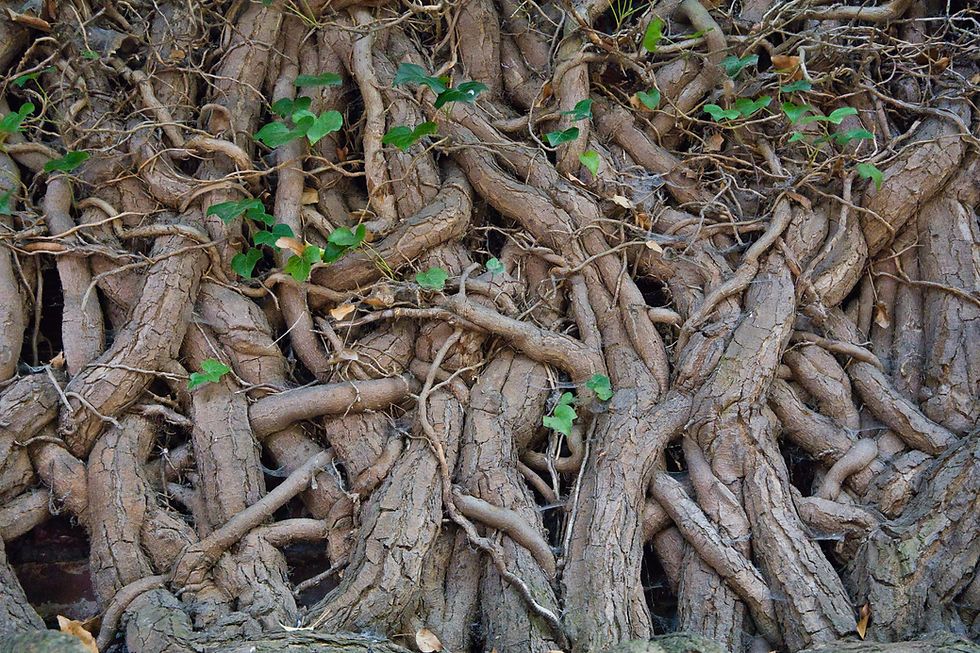
We contemplated which image of "knot", or pattern of "knots",
to head this section of our site; not just as an interesting visual,
but to also to help communicate the simple and organic way interconnectedness (a gathering or togetherness)
is so naturally beautiful & thought provoking.
Our art of knots section is designed to help highlight the history of hand-made knotting techniques, from civilizations of antiquity,
while showing the way this human technology has evolved
and expanded throughout time in cultures &
nations around the world.
One of the many purposes for doing this is to help acknowledge, and preserve, ancestral creativity, wisdom, and teachings tied to a skillful, purposeful, and intuitive knowing of knotting;
Intentional binding.
The practice of knots, learned and applied by human groups the span our world over since ancient times, continues to
influence and inspire us today.
Yet, and while we cannot take away from the intelligence and diverse sensibilities involved in the creative process of each civilization and society who have managed to make a notable imprint based on the way they discovered how to knot, and
then replicate it, and evolve for many diverse usages,
we want to also include a very possible inspiration for
(or curiosity of) the knot - nature.
Particularly the roots & stems of trees & plants. Parts of these living things that mark the start and journey of their growth and
evolution, the uniqueness of their design and path, and
the resilience in their existence & expansion
No two trees or plants, or roots or stems, are the exact same in their inherent design (or blueprint); each is inherently divergent in by the nature of its organic creation. Even when they're of the same species. Each has its own way of sprouting, taking root, and forging it's way up and outward based on how it interacts of senses
(communicates with) its environment.
Naturally.
For plant lovers and gardeners, or those who work with trees, there is a respectful recognition, a humble mindfulness, that comes with recognizing the beautiful way they way each responds when they're surroundings (along with what they're immersed in) is in resonance with what they need for optimal health & wellness.
When a plan is in the right soil or propagation source, the right pot or growing space, with the right amount of water and lighting, while experiencing the right temperature, and able to feel or experience the right energy (in other ways)...they flourish.
In their flourishing, their offerings are divine. Even in the simplicity
of their being or experience of wholeness. An intentional living
(or being) that brings a peaceful sense and
resonance of freedom, ease, and flow.
Similar to the sensation of practicing an immersive, sensory conscious, art that brings an accessible sense of
relatability; like macrame.
We believe our ancestors noticed this in the plants and trees
around them and incorporate nature's teachings, by connecting with it more, into their way of being. By doing so, here we are
today practicing fiber arts and making linkages
(meaningful connections) in the process.

At Boho & Knots, we aim to
plant & share seeds of knowing, through our work, to help elevate your sense of knowing more of
what feels like wholeness &
wellness (and why) within each
root and stem of
your being.
In the process, we believe,
you will become more intuitively curious, mindful, and intentionally empowered to access,
activate & amplify new blissful
experiences from your
creative expansion.
And then, ideally, you will naturally become inspired to plant and
share more seeds, with
purpose, of your own.
Macrame
While we linked the reference "the art of knots" to nature and roots, the creative descriptor is commonly associated with the art of macrame (as we know it in many western cultures). Macrame is part of the fibre arts' family that includes weaving, crochet, knitting, quilting, embroidery, and sewing and is actually
"rooted" in the textile industry as it's part of the
creative process many tapestries.
All fiber art forms use different textiles, fabrics and materials, sometimes with the help of different tools and equipment (such
as crochet sticks, knitting needles, or a weaving loom) to
creatively interlock different measurements of threads, yarn,
cord (etc.) to create beautiful patterns and pieces of art.
Macrame however, in standard practice, doesn't require tools or equipment to make its connective patterns. Instead, it uses
different knotting (sometimes combined with weaving) techniques,
made by hand, to create artistic or practical
designs (some simple, elaborate, or intricate) for different uses.
Hence why it's sometimes referred to as "the art of knots".
Additionally, while all fibre arts can be used in multiple ways, especially when we think about the manufacturing textile industry that uses industrial machines to mass produce linens,
rugs and carpets, clothing and many other items;
knots are also part of those creations.
However, in some parts of the world, some textiles such as rugs are
still made by hand as they were before advanced technology created ways for machines to replicate some
of the creative work of artisans.
Before we dive into some of the beautiful knotted tapestries and weaving patterns have easy to identify parallels to the macrame we see today, let's explore some ancient knots that are
more stand alone symbols that also link the macrame we see today.
Although to see the connections, it sometimes requires tapping into (or attuning to) new or diverse parts of our sensibilities;
ones that may not be activated as much as others.
While many of the symbols in this section of our site are either depicted or replicated in more tangible hard materials (ie: ceramics, metals, glass, wood, etc.), the origins of many of them were made from more flexible and accessible textiles and natural fibers.
We trust that through this journey of exploration and discovery, you will start to look at objects you generally see and accept simply
"as is" with more nuance.
Curiosity, by the way, is a muscle that we can strengthen with practice. In our conventional world (including the spaces, interactions, and activities etc.), we often become less curious because it seems there isn't enough time to experience, appreciate, inspect things with more mindfulness.
As such, we tend to not respect things as much which, in essence, hinders one's ability to experience more expansion. While we all have a common shared understanding of the word "respect", a teaching of the Haudenosaunee people in relation to the word (paraphrasing) is that it means to "look twice".
RE-Inspect.
Whatever the initial belief that comes to mind when observing something, or someone, we are invited to consider if our
initial perception was accurate, limited, or impaired by
the default range of our own sensibilities,
consciousness, and state of wellbeing.

Symbolic Knots
Some of the oldest knots can be traced back to antiquity. While many of these knots of centuries past, as symbols, have been recorded and preserved in fossils or along the walls as hieroglyphs which often gives them a 2 or 3 dimensional appearance, many of these knots were actually made of materials.
Replicas of these knot symbols over the years are often sold or gifted as ornaments or jewellery.
Yet, originally, centuries ago, they were made of
textiles, fabrics, and natural fibers.
Similar to macrame.
A popular Ancient Egyptian knot is the "Ankh" and it dates back to 4000 BC. It is said to represent life, fertility, and the afterlife. It also said to depict the symbols of both males and females.
Interconnectedness.
Another well known Ancient Egyptian knot is the
Isis Knot (often tied to the Goddess Isis) or the
Tyet Knot (sometimes spelled Tjet).
In ancient records, this knot symbolizes love,
intuition, and transformation. Isis also represents motherhood, new beginnings as well as
growth, eternity, hope and more.
Another knot symbol in the background image is the Shen Knot or Shen Ring, became more popular in ancient times around 2040-1782 BCE. It is linked to the God Horus and Goddess Nekhbet.
The God Horus represents healing, protection, and kingship. He is also known as the sun and the sky as noted by him often being depicted with a Falcon headdress. The Goddness Nekhbet
symbolizes sovereignty & protection; she's seen
as a strong Vulture Goddess.
The Shen Knot is said to represent the
circle of eternity and eternal protection.
It is characterized by a loop rope with no beginning, and no end, affixed to a line tangent (or stick). As such, many replicas of this symbol are in the form of a ring.
However, both the Ankh, Isis, Tyet, and
Shen Knots have details that appear to indicate the were made using textiles or natural fibers were
used in their original creations. As well, some of the details in the the hieroglyphs, artifacts, and replicas show the knot techniques common in macrame.


Knots in Ancient Art & Technology
Using knots for creative, and functional purposes, dates
back to ancient times; it's also an organic technology that
has been used for centuries by many different
diverse nations and civilizations.
As an example, the "quipu", which means "knot" or "to knot", originated by Andean Civilizations, particularly the Caral-Supe Civilization (c. 2600-1800 BCE), later being adapted
by the Wari Empire (c. 600-1000 CE), and continued to
be evolved by many Andean nations over time.
BCE = Before Common Era.
CE = Common Era.
Caral-Supe, also known as "Caral" and Norte Chico. It is known as being the oldest known civilization in the Americas. A Peruvian Archeologist, named Ruth Shady, states"...that [Caral] was a peaceful society, based on commerce and pleasure [from arts, culture, being in community, etc.], rather than war.
The quipu is known as one of the earliest and most
sophisticated methods of record keeping and
communication found to-date.
The quipu was created as a technology for record keeping,
data storage, and language; all by using patterns of knots.
Some common uses of this method includes
using it for communication, measuring distance,
and accounting. Quipu was also used to record
genealogy and census data.
The quipu wasn't only used for data storage, it was also used for arts, culture, and such as poems, songs, prayers, etc.
One of the elements that makes the quipu more fascinating is that its use, as a primarily administrative practice, served as a dual function (so to speak) in that it while it was used to store and reference data, information, narratives (by quipu keepers known as khipukamayuq - who were recite long passages) and art, at the same time, it served as beautiful pieces of art by virtue of the textiles, colors, and patterns used in the process.
Quipu were often made using fine cotton and camelid fibers from llama, alpaca, and vicuña wool. Additionally, the different colours
used in the creation process held different symbolism and
meaning as well; this served to help to identify
roles (ie: warriors, elders, etc.), different social groups
and lineage, moiety affiliation, and more.


Photo of the Inca Alphabet: The Quipu System | Ultimate Guide - Photo Credit: https://blog.incarail.com/inca-alphabet/
"The way the people of Caral used textiles for language and sharing information suggests their reliance on diverse sensibilities and creativity to develop and expand the quipu's purpose.
It's believed they not only understood the nuance and
influence of these sensibilities in creation,
but also intuitively ensured their creations
were multi-sensory and accessible.
This suggests the Caral people existed in a state of remarkable societal well-being, fostering a culture where knowledge could
be woven, seen, and felt in multiple ways. Related knot
practices have not only survived thousands of
years but have been adopted and adapted by people
all over the world; even to our modern use of macrame.

Quipu
The terms "quipu" and "khipu" derive from the Indigenous language of Quechua which
was the primary language of the
Inca Empire; it continues to
be spoken by millions of
people, today, across
Peru, Bolivia, Ecuador and
many neighboring countries.
Background Photo Credit: Machu Travel Peru - https://www.machutravelperu.com/blog/quipu
The Mystic Knot
While the quipu of the ancient Andean civilizations offers a
glimpse into knots as sophisticated record-keeping and
multi-sensory art, the profound artistic and symbolic use of
knots finds even deeper spiritual roots in India.
There, the Mystic Knot is known in Sanskrit as Shrivatsa, a
mark of prosperity and one of the Ashtamangala, or
Eight Auspicious Symbols, in both
Hinduism and Buddhism.
In Tibetan, it is called Palbeu, or the Eternal/Glorious Knot,
deeply embedded in their spiritual practices

From these ancient Indian origins, this powerful symbol,
along with Buddhist teachings, journeyed across Asia.
In China, it was embraced and transformed, becoming a cornerstone of the rich and intricate art form known as
中國結 (Zhōngguó Jié), or Chinese Knotting.
Here, the Mystic Knot, or Pan Chang Knot, along with countless other designs, evolved into a beloved decorative textile art, symbolizing not only spiritual principles but also longevity, prosperity, and enduring connections in daily
life and celebration.
In Mandarin, the word "Jié" (結), means "knot",
"to tie", "to bind", "to connect"
The Mystic Knot is is one of many knots used in Chinese arts and culture that holds a lot of symbolism and meaning.

The Endless Knot
"Wandering Through
Within Tibetan spiritual traditions, the Endless Knot (Palbeu), one of the Eight Auspicious Symbols, carries particularly profound meaning. Its continuous, interwoven pattern, without a discernible beginning or end, serves as a powerful visual metaphor for Samsara.
his ancient Sanskrit term, meaning 'wandering' or 'continual flow,' symbolizes the unending cycle of birth, death, and rebirth, and the interconnectedness of all phenomena
within this journey.
Though often depicted in diverse mediums like stone or metal, its fundamental form originates from the act of knotting, and it is frequently found woven into sacred Tibetan rugs or
painted on thangkas (fabric scrolls).
The knot thus embodies the spiritual concept of existence as an intricate, continuous flow, reminding practitioners of the path to
liberation from this cycle.
This eternal 'wandering through' echoes a timeless human archetype, resonating across diverse philosophies, from spiritual doctrines
to the free-spirited ethos often
associated with bohemianism.
The endless knot symbolizes wisdom, protection, good fortune, and more.
The knot is often seen in Chinese and
Tibetan art as well as mandalas.

Turkish & Persian Carpet Knotting
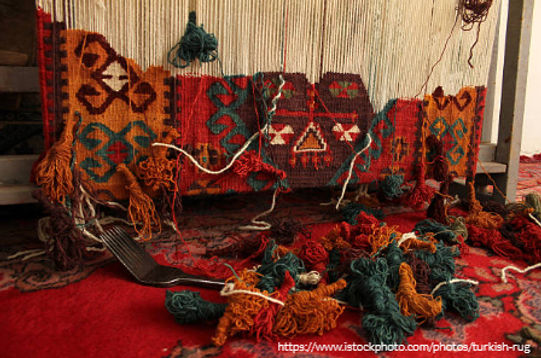
Arabic and Middle-Eastern cultures, such those from Persian and Turkish, are known for making beautifully intricate hand-made knot rugs. While they are not the only cultures in the world who make these decorative floor coverings, they are amongst the most popular.
The hand-knotting method for creating rugs by both cultures dates back to the 5th century BCE. The oldest known of such rugs is called the Pazyryk rug which was found by archeologists frozen in a tomb in Serbia (on a burial mound of the Scythian people or the Scyths). It is thought to have been an burial offering during a funeral ceremony. While the rug was found as an accessory in the tomb, scholars continue to debate the origins of the rug as the finding the artifact in one place could mean it the location of where it was created was somewhere else.
However, what scholars do agree on is that the Pazyryk rug features a symmetrical knotting pattern that is common of the "Turkish Knot" (or Armenian Double Knot or Ghiordes knot). This knotting type is common with traditional Turkish (Anatolian) rugs related to regions
and cultures tied to Turkic people. In contrast, Traditional Persian knotting techniques (Senneh knot) use an asymmetrical pattern.
It remains unclear, however, where the origins of the Pazyryk.
Scholars continue to debate if its was developed in Ancient Armenia, Persian, Scythian, or if it has ancient Central Asian origins.
Either way, its a beautiful piece that continues to spark
curiosity and stimulate the wonders of our sensibilities.
Imagine that one person, back around the 5th century, playing around with some textiles making patterns (in their own world); likely just because exploring the way the way they could connect the threads brought ease & flow to their sensibilities; a resonance that brought bliss to their wellbeing. Then, after several hours, days, or weeks of repeating different patterns in that state, and finding a rhythm....boom.
A whole rug! Something that never existed before.
Creative Expansion!
The creator of Pazyryk Rug had no idea, it would turn into an inspirational tapestry that would influence modern carpet production throughout time while, simultaneously, causing scholars to remain forever curious of the origins to one of the oldest hand-knotted rugs in the world.
One of the many interesting details of hand-knotting rugs is the similarities it has to macrame as both creative art forms use weaving
and knotting techniques, together, in the process of creating. Some main difference is that making rugs requires much more space, cord, and tools. Additionally, it also requires a particular vision (or divergent sensibility) to be able to visualize (or draw out) the rug design (including any motifs and patterns that will use different colors) before or
during the creative process.


Sensory Details
The creative skill, including sensory abilities, to make these incredibly pieces is beyond impressive. Especially when we factor in the size of most rugs and the time it must take to create them. While it is easy to simply attribute the creative process as "work" or a way to generate income, there has to be more to it when you factor in the vision, planning, and time commitment required to start and complete each rug. Creative dedication and discipline are definitely factors in the process, as well as artistic integrity and related ethics, however,
there is also an often unspoken sensory consciousness is woven
into the threads. An alignment of sensory integration
that can feel almost divine.
An interconnected sense of oneness.
As mentioned in previous sections of our site, we mention that macrame is a meditative art (like many other creative practices). Arguably most people do not do enough meditative activities do to life demands and related responsibilities; many of which can make meditation (in general) challenging. However, when people are able to sit for hours at at a time, immersed in an activity for long periods of time (especially if there's repetition and patterns involved), it indicates a resonance
(or activation) of one's divergent sensibilities.
An amplification of one's wholeness in a blissful vibration.
How could this not elevate one's sense of wellness and wellbeing
when working on something that brings them to such a state?
How often do we get to experience such a connection or how often do we find something that creates the possibility?
When we think of macrame, and related sensory conscious arts, we don't just admire the creative fun and joy of working on the craft or the skill building or beauty of the creative process. We also think about the
way the art can offer the creator or consumer of the art a sensory
experience that resonates with aspects of their unique sensibilities
(or neurodiversity); even in ways they may not be able to articulate.
When people, we look at these beautiful hand-knotted Turkish and Persian rugs, or if we pass them in a shop or in another environment, they offer so much more than something to admire or purchase.
There is a story and soul attached to each creative piece. Hands that touched each and every fibre; eyes that carefully ensured each thread and colour was accurately placed (correctly as/if needed);
a rhythm that played with during the knotting (weaving) of each strand.
The sound of the friction as each piece of material crossed each other creating a frequency; almost like a melodic song.
A magical set of sensations working together, in unison,
like an orchestra following the direction of the spirit.
So Sensually Sensational!
While many rugs are mass produced today, we want to acknowledge that there remain artisans who continue to make hand-knotted rugs in Turkish, Arabic, and others cultures. We will continue to update our website to expand our this section of our website to help showcase the beautiful, intricate, and sensory engaging hand-made knotted rugs
(and related creations) throughout the world.
Enjoy the images below.



Macrame Lace
"Macramé Lace is not a difficult work to learn, and when
once the various knots are mastered the worker will find
it a delightful pastime."
— Sylvia, from Sylvia's Book of Macramé Lace, 1882.
Victorian Era & Macrame
It is a common belief, in pop culture, that macrame (as most people know it to be) originated in Europe, during the
Victoria era back in the 19th century.
Yet, as noted above, the art of knots, existed way
before then in different forms and for different
cultural and other purposes. However, macrame did gain a lot of popularity, in terms of modern societies, during that time period
as it was associated with "class and status" (and in some ways, fashion). Back then, most women and girls (of a certain age) were expected to learn macrame due to the social currency it
emulated and could generate.
During that era, macrame became something that held value
and was shared, traded, and sold between different nations
as seafaring exploration, colonialism, and
different industries expanded.
Additionally, while macrame held significance in Europe once upon a time, it did lose it's appeal over the years as new creative
trends emerged at the same time as socio-cultural shifts and the industrial revolution (and mass production) began to expand.
While macrame did become "old fashion" at at point, it re-emerged in popularity in the 1970s with the bohemian movement that began in
Paris, France and then again in the 21st century
driven by the rise of social media.


Macrame Today
During the global health crisis that began in 2019/2020, that led to what we many refer to as "lock downs" (due to quarantine, related illnesses, and remote & hybrid work becoming more common), people began exploring ways to pass time at home, manage their
well-being, and keep creative.
Social media use increased during this time, as did the number of "side hustles", influencers & content creators, and people finding new hobbies and talents(or tapped back into one's they've stepped away from).
While the pandemic was a very challenging
and traumatic time or most people around the world, it also provided an opportunity for people to pause and re-evaluate their values, beliefs, goals (etc.) and to assess if they were
living in alignment with them.
Macrame re-emerged in popularity during this time and helped raise the profile of eco-friendly and sensory conscious art (particularly those within the fibre arts family as crochet also increased in popularity during that period).
It also helped raise the profile of a very beautiful art form that dates back centuries!
Additionally, it helped create a shift in social norms whereas more people began working more with their hands, decreased their screentime (in terms of "doom scrolling" or people watching as examples), and began to empower themselves to use their hands (and tools at their access) to create handmade goods. This period also sparked a rise in
people creating supplemental income opportunities, building new connections
and collaborations, and even
building or expanding business!
The lockdowns and work-from-home period helped people tap back into themselves, to explore their interests, and many used their diverse sensitivities to expand creatively and helped show how much art plays a part in healing and wellness!
Generally, people will find macrame art being sold at niche shops, markets, at art-fairs and online shops (as example), today, we now see macrame art being sold in popular and common stores such as Winners,
Marshalls, and other retail stores.
From observation and different discussions, it is common to hear or see people in the west express appreciation for the art form mainly for its beauty, its aesthetic, and uniqueness (especially for those into "boho" art,
minimalism, or creative pieces).
However, when we think about the symbolism and organic value tied to art-of-knots, since ancient times, we get the sense that there's more to enjoy or like about macrame
than just how it looks. Especially when we consider its origins and continuing
to exist, and evolve in many cultures today.
Additionally, macrame is enjoyed by those who have (or curious about) sustainability initiatives and related consciousness such as those tied to: simplicity, minimalism, and unity; environmental care, connecting more with nature, conscious eating, and natural care (etc.). All things bundled into healing & wellness. With that, it's no
wonder we seen so much creative
expansion during a scary time.
Creativity is healing, and healing
influences creativity.
Macrame & Mindfulness
Macrame has so many elements that stimulate and enhance our sense of mindfulness. The cord types, different knots and patterns, textile materials, tools used, the process of creating (etc.)...there's so much to take in through out immediate senses. Yet, people who macrame can attest, that this art form is incredibly meditative and organically immersive. With that, those working on the craft will often find themselves noticing things, outside themselves and within,
that they didn't notice or sense before.
We believe macrame can be used as a tool to help activate or
enhance a broader range of our diverse spectrum of feelings (senses);
more so the ones that help elevate one's sense of
wellbeing, quality of life, and creativity.
In life, due to acute or prolonged (chronic) exposure to stimuli that doesn't resonate with us, whether before we were born or after, our sensibilities can become impaired and have a negative
impact on one more areas of wellbeing.
Macrame is not just an art, it's an experience; one
that allows us to create, learn, and expand
in awareness & consciousness.
We invite you to practice more mindfulness as you go
through your days and see if you can spot new knots
that you didn't notice before. Especially in patterns.


Nautical Miles
Every wonder why sea vessels planes use "knots" to describe their speed of travel?
It's actually tied to "knots"!
A historical fact about "knots" is related to how how water vessels, and airlines respectively, refer to the speed at which they travel.
Instead of using miles or kilometers, they use "knots" because seafarers and sailors learned would throw a piece wood, referred to a chip log, into the water at different intervals;
the log attached to a rope with knots.
Below is a photo of the chip log.
They would then time how many knots passed, using an hourglass, to help calculate the speed of the vessel in nautical miles(which is based on the latitude and longitudinal system) per
hour which became known as "knots".
Pilots also use the nautical mile system
which is why they use "'knots" in reference
the speed that they travel as well.
To read about our work on accessibility
click the link below.
